Crawl space vapor and pest encapsulation in Louisville addresses the unique hydro-geological conditions present across Jefferson County. Properties situated near the Ohio River alluvial deposits in Portland and…
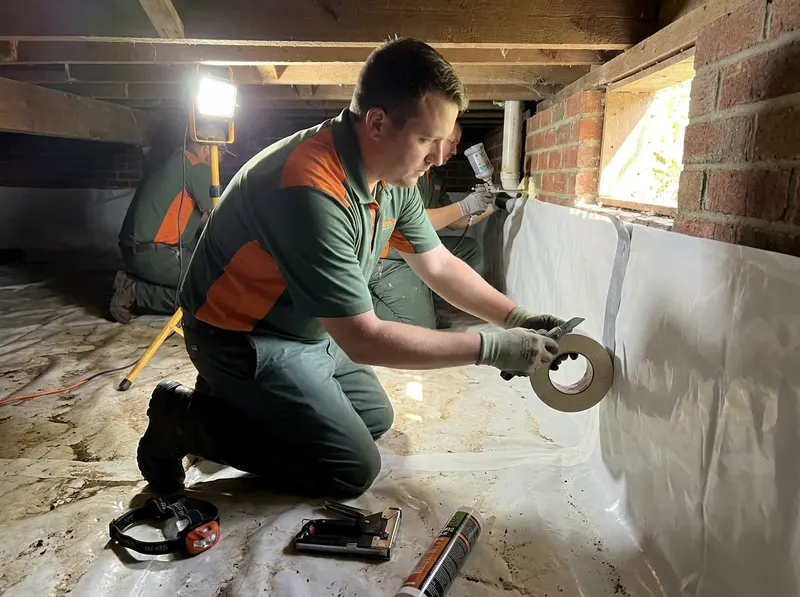
Crawl space vapor and pest encapsulation in Louisville addresses the unique hydro-geological conditions present across Jefferson County. Properties situated near the Ohio River alluvial deposits in Portland and Shively, as well as limestone-heavy soils across St. Matthews and Crescent Hill, experience sustained relative humidity levels exceeding 70 percent beneath subfloors. Soil moisture migration transfers vapor into porous floor joists, creating the specific softwood saturation levels that eastern subterranean termites (Reticulitermes flavipes) and powderpost beetles require to digest cellulose. Sealing the substructure with a multi-ply, 12-to-20-mil poly barrier stops earth-evaporated dampness and isolates the wood framing from subterranean insect colonies.
Decision guidance relies on foundation physics: vented crawl spaces pull humid outdoor summer air directly across cooler foundation footers, producing condensation beneath subfloors. If an owner observes isolated seasonal moisture or detached insulation batting, vent repair and selective floor covering may restore stability. If structural checks reveal white rot fungus, camel cricket congregations, active rodent burrows, or soil-contact dampness, full encapsulation is required. The trade-off is mechanical integration: sealing vents requires the installation of a dedicated, continuous drain-line crawl space dehumidifier (rated between 70 and 100 pints per day) to manage ambient air volume, rather than relying on passive airflow that introduces pest attractants.
Older housing inventory requires distinct exclusion engineering. The brick pier foundations of late-19th-century houses in Old Louisville and the stone-and-mortar crawl foundations in The Highlands, Clifton, and Germantown feature irregular surfaces where standard glue adheres poorly. Structural technicians mechanically anchor the liner 6 to 12 inches above the exterior grade line using concrete masonry fasteners and closed-cell polyurethanes, leaving a mandated 3-inch termite inspection gap beneath the sill plate for regulatory compliance. In post-war subfloors throughout Jeffersontown and Pleasure Ridge Park, galvanized steel mesh (quarter-inch hardware cloth) is fitted behind vent openings to prevent Norway rats and mice from gnawing through the newly installed vapor barrier.
Every job gets a firm, written price after a free on-site visit.
Tell us about your crawl space vapor and pest encapsulation job in Louisville and we'll send a clear, written quote, usually the same day.
 Orvanta Pest Guard