Overwintering pest defense in Louisville targets insects that aggregate on residential structures during the seasonal temperature drops of late August through October. Species such as the brown marmorated stink bug…
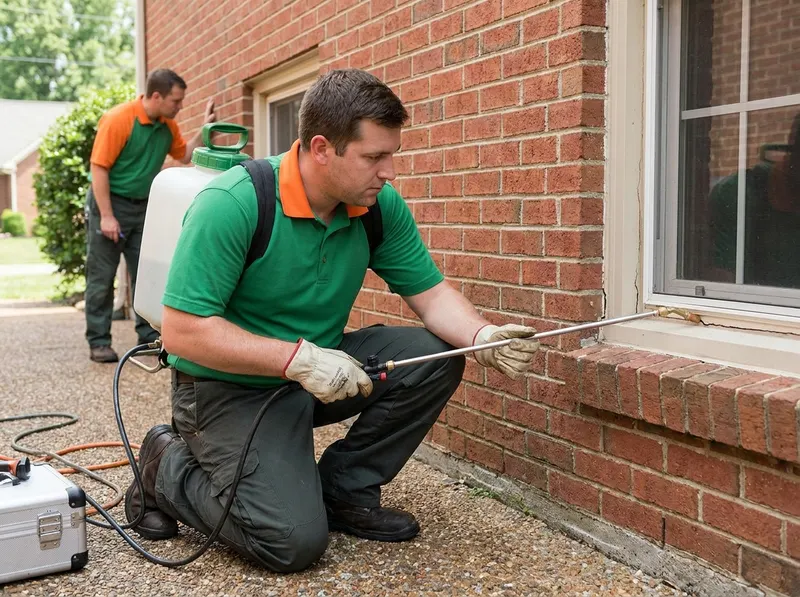
Overwintering pest defense in Louisville targets insects that aggregate on residential structures during the seasonal temperature drops of late August through October. Species such as the brown marmorated stink bug (*Halyomorpha halys*), boxelder bugs, and multi-colored Asian lady beetles utilize the thermal mass of south- and west-facing exterior walls to absorb heat before creeping into siding joints, soffit vents, and window frame clearances. If exterior entry points remain unsealed, these insects enter wall voids and attic insulation, emerging inside living areas throughout mild winter days or spring warm-ups. Standard interior aerosol foggers fail against overwintering aggregations because the primary populations remain suspended within wall cavities. Effective barrier defense relies instead on exterior physical exclusion paired with micro-encapsulated surface applications executed before interior ingress concludes.
Architectural styles across Louisville dictate specific entry risks that alter defense requirements. Historic brick masonry, multi-story roof pitches, and decorative timber corbels in Old Louisville, The Highlands, and Crescent Hill present deep mortar gaps, loose fascia boards, and chimney flashing voids that accommodate heavy stink bug clusters. Conversely, mid-century ranch homes and split-levels in St. Matthews, Jeffersontown, and Pleasure Ridge Park feature low rooflines, perforated vinyl soffits, and weep holes that allow low-elevation infiltration. Proximity to dense tree canopies, such as residential parcels bordering Cherokee Park, Iroquois Park, or the mature oak corridors near Locust Grove, elevates local insect pressure, as stink bugs migrate directly from summer host foliage to nearby built structures. Properties in Portland, Germantown, Clifton, and Shively also face intense aggregations along unshaded southern exposures.
Perimeter treatment protocols follow a clinical 4-step sequence to halt structural infiltration without continuous chemical exposure indoors. 1. A diagnostic perimeter assessment measures window caulking integrity, attic ridge vent screens, utility line penetrations, and siding overlaps. 2. Technicians install copper mesh and elastomeric sealants across accessible openings measuring 0.125 inches or larger. 3. High-pressure delivery equipment applies a targeted, micro-encapsulated exterior residual barrier to sunny upper eaves, soffit transitions, window headers, and door casings. 4. Botanical repellent barriers are positioned along lower thresholds and crawl space access panels. The physical barrier prevents entry, while the external treatment neutralizes congregating clusters on contact. For multi-story homes exceeding 2,500 square feet, aerial lift access or extended reach nozzles are required to reach peak fascias, which adjust application timing and investment.
Every job gets a firm, written price after a free on-site visit.
Tell us about your brown marmorated stink bug and overwintering pest defense job in Louisville and we'll send a clear, written quote, usually the same day.
 Orvanta Pest Guard