Thermodynamic elimination requires elevating indoor structural core temperatures between 120°F and 135°F using industrial convective electric heaters. Sustaining this threshold for 4 to 6 hours achieves protein…
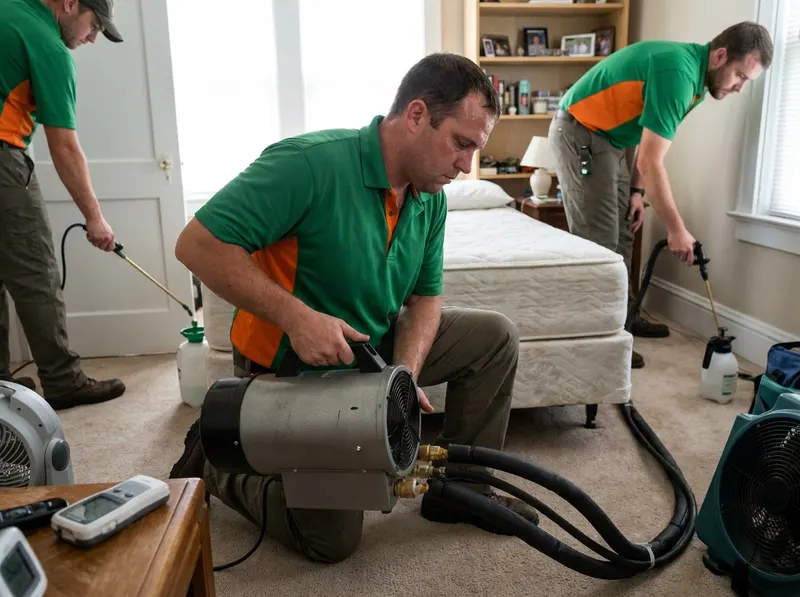
Thermodynamic elimination requires elevating indoor structural core temperatures between 120°F and 135°F using industrial convective electric heaters. Sustaining this threshold for 4 to 6 hours achieves protein coagulation inside adult bed bugs, nymphs, and unhatched eggs, penetrating baseboards, mattress cores, and wall voids without volatile pesticides. Homes across Old Louisville, Crescent Hill, and Portland featuring historic plaster lath, heart-pine flooring, and non-insulated hollow cavities benefit from thermal convection, which reaches harboring pests where standard surface sprays fail to absorb.
Targeted chemical remediation serves as a secondary protective envelope rather than a standalone spray. Following the heat phase, non-repellent liquid residual agents and micro-encapsulated insect growth regulators (IGRs) are applied along baseplates, electrical switch plates, and frame joins. If an adult bed bug avoids thermal saturation by retreating to an exterior cold spot, such as exterior masonry along brick Victorians in The Highlands or ground-level subfloors in Germantown, the contact residuals interrupt reproductive chitin development. This hybrid protocol stops re-infestation cycles without leaving hazardous airborne residues for households with children or pets.
Thermal remediation requires thorough spatial preparation: aerosol canisters, candles, delicate electronics, and prescription medications must be removed from the treatment envelope prior to system heating. Properties in high-density multi-family structures, such as duplexes in Clifton or apartment units in St. Matthews, frequently present shared-wall migration risks. Where full-structure heat application is physically restricted by electrical draw or multi-tenant layouts, a localized residual perimeter combined with targeted localized steam offers an alternative, balancing containment efficacy against structural electrical limitations.
1. Technicians conduct an inspection using thermal sensors and visual probe tools along mattress seams and baseboard margins. 2. Heavy furniture is arranged away from drywall to optimize industrial airflow paths. 3. Convective heating units and axial air movers run continuously until structural sensors confirm 122°F core heat absorption. 4. Spot applications of low-toxicity residual dusts protect wall cavities and outlet boxes. 5. Follow-up digital monitoring determines complete population eradication across 14 to 21 days.
Every job gets a firm, written price after a free on-site visit.
Tell us about your bed bug thermal and chemical remediation job in Louisville and we'll send a clear, written quote, usually the same day.
 Orvanta Pest Guard